


In cities spanning the globe, Jewish communities are already marking the 66th anniversary of the passing in 1950 of the Sixth Rebbe—Rabbi Yosef Yitzchak Schneersohn, of righteous memory—and the day that his son-in-law, Rabbi Menachem M. Schneerson, of righteous memory, known simply as “the Rebbe,” became the seventh Rebbe.
Commonly referred to as Yud Shevat (the 10th day of the Hebrew month of Shevat)—and corresponding this year to Tuesday, Jan. 19, and Wednesday, Jan. 20—it has become a time of introspection and inspiration for Jews touched by the Rebbes’ joint vision to share Torah and Judaism with their brethren, wherever they might be. Chassidic gatherings worldwide will focus on learning some of the Rebbes’ teachings; reflecting on the Rebbes’ love for every Jew; and rededicating oneself to the Rebbes’ directives of personal and communal growth in Torah learning and Torah outreach.
Communities often invite Chassidic leaders and rabbis to lead these gatherings, known as farbrengens. Among many others, Rabbi Moshe Feller of the Upper Midwest Region will join the gathering in Chicago; and Rabbi Yisrael Deren of Southern and Eastern New England will join the one in Vancouver, Canada.
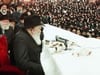

Many thousands of people are also expected to visit the resting place of both Rebbes—known as the Ohel—in the Cambria Heights neighborhood in Queens, N.Y. They will also attend farbrengens there and in the Crown Heights neighborhood of Brooklyn, N.Y., home of Lubavitch World Headquarters.
Rabbinical students from Chabad yeshivahs around the globe will be among them. For them, the trip to New York comes after weeks of intensive Talmudic and Chassidic philosophical study and preparation for this significant day.
Marking the Day with Torah Study and Good Deeds
Along those lines, high-schoolers at the Lubavitch Mesivta of Chicago were encouraged to keep personal logs over the past few months of how they wisely spent their time and how much they learned for a number of weeks prior to the trip. They also participated in a schoolwide campaign to learn Talmudic folios and maamarim (Chassidic discourses) of the Rebbe by heart.
Of all discourses, the one most studied in conjunction with Yud Shevat is Basi LeGani. It was issued by the Sixth Rebbe to be studied on Shabbat, 10 Shevat 1950, in honor of his grandmother’s 36th yahrtzeit. At the end, he himself passed away on that very Shabbat morning.

Exactly one year later, the Rebbe formally accepted leadership of the Chabad-Lubavitch movement and delivered his own discourse, expounding upon themes found in his predecessor’s discourse. This would become an annual tradition for the next four decades.
Those discourses, alongside the original discourse of the Sixth Rebbe, are often studied before and on Yud Shevat.
See the Rebbe’s letter about the customs of 10 Shevat
Study Basi LeGani in a number of formats
Send a petition for prayer to the Rebbe’s resting place
Join a live study session of a teaching of the Rebbe with Rabbi Tzvi Freeman at 8 p.m. EST



Start a Discussion